Before adoption: a checklist for a safer home
A ready home has a workable care arrangement and unresolved risks written down, not just a basket of new supplies.
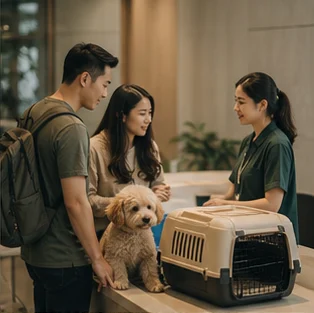
Before agreeing to an adoption, examine the ordinary week the animal would enter. A beautiful bed cannot compensate for a missing daily carer or an unsafe exit. Use this check to identify what is ready, what needs work and what you must ask the rescue or previous guardian.
What to take away
- Agree responsibilities before the arrival date.
- Inspect access routes as well as rooms.
- Keep unknown history visible.
- Use a prepare-more decision when needed.
01Assign the work that affection creates
Write down who will feed, clean, exercise or provide appropriate activity, arrange appointments and pay for care. Include busy workdays and illness, not only the weekend when everyone is available.
Name a backup person and ask whether they actually agree. A practical test is to walk through tomorrow's schedule with the animal in mind and identify each task that currently has no owner.
02Inspect the ways an animal can reach trouble
Look at medicines, cleaning products, food, cables and swallowable items from the animal's height. Check doors and windows, including the routes opened by deliveries, cleaners and visitors.
Turn observations into assignments: 'secure the medicine cupboard before arrival' is actionable; 'be careful' is not. Do not rely on a high shelf if the animal could climb or knock something down.
03Plan for the existing household
Consider resident animals, children's routines and a place where the newcomer can withdraw. The ability to keep animals apart matters before anyone assumes that a friendly first meeting will solve introductions.
Ask the rescue what is known about the animal's previous experience. Unknown compatibility is a question to manage, not permission to test tolerance through an uncontrolled meeting.
04Receive records and conditions in writing
Request available veterinary, feeding and adoption information, plus a contact for questions. Read the actual organisation's handover conditions instead of importing a checklist from another country.
A useful message is 'Could you send the current food, health records and handover requirements before collection?' Keep original documents; do not create missing vaccination dates or claim that adoption papers guarantee health.
05Make a clear readiness decision
Create three columns: ready, action required, and answer needed. Set an owner and a realistic completion date for every unresolved item. A delayed collection can be more responsible than pretending the list is complete.
Recheck costs using actual local estimates and discuss ongoing commitments. This is not a test of whether you deserve a pet; it is a way to build a home whose promises can be kept.
Questions to take with you
Questions you can use
- Who covers care if the usual person is unavailable?
- Which risks must be resolved before collection?
- What records or conditions remain unconfirmed?
This guide supports preparation and conversation, not diagnosis or veterinary treatment. Contact a veterinary provider for health concerns or possible emergencies; do not delay care to complete a checklist.
Sources and how to use this guide
These sources support the principles in this guide. It has not had a veterinarian’s clinical review, and it is not a facility inspection or a service-quality certification.