Bringing a kitten home: do not open every door at once
Make the first transfer predictable: a prepared room, a secure carrier and one clear handover of familiar routines.
A kitten arriving home needs a manageable place to begin, not immediate access to every room. The first day is about a calm transfer and reliable information, while confidence and household introductions develop at an individual pace.
What to take away
- Prepare the room before opening the carrier.
- Keep the previous caregiver’s information in its original form.
- Let the kitten choose when to approach.
01Receive information, not just belongings
Ask for the kitten’s current food, feeding routine, litter type and actual veterinary records. Separate what the previous caregiver observed from what a clinician documented, especially when a date or treatment name is uncertain.
Pack familiar belongings only when they are suitable and available; they are not a substitute for records. Confirm any current care instruction with the issuing clinic rather than translating a medicine name into a new instruction yourself.
02Check the arrival room at kitten height
Arrange accessible food, water, a litter area, hiding places and somewhere to rest. Look behind furniture and around cables, windows and doors before arrival, because a small opening can be easy for people to overlook.
Choose a room where necessary household activity will not repeatedly displace the kitten. In a shared apartment, tell everyone which door must stay closed and where deliveries or cleaners should be directed.
03Make the carrier part of the transfer
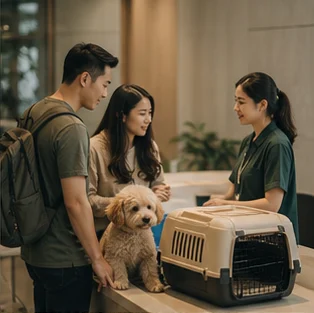
Use an appropriate carrier and keep it secure through the journey. Plan the vehicle, entrance and person receiving the kitten so you do not need to open the carrier in a corridor or outside.
Place the carrier in the prepared room and allow a calm exit when the kitten is ready. Avoid tipping it or pulling the kitten out for a greeting. Ask a veterinary provider for help if health concerns make ordinary transport unsuitable.
04Offer contact without demanding it
Stay available at a comfortable distance and let the kitten approach. Hiding is information about how the moment feels, not a challenge that must be overcome by handling.
Keep other animals and excited visitors out of the first welcome. Future introductions need their own supervised plan; carrying a kitten up to a resident animal does not replace that process.
05Hand over the evening accurately
Note what food and water were offered, where the kitten rested and what you actually observed. Keep uncertainties visible so the next caregiver does not mistake an unobserved event for a confirmed one.
A door note can say, “A kitten has just arrived. Please close the door and call [name] before entering.” Share clinic questions too. Seek veterinary advice for health concerns instead of assuming every change is caused by the move.
Questions to take with you
Questions you can use
- Which food, litter and records should come with the kitten?
- Who will receive the carrier in the prepared room?
- How do we keep the first welcome separate from pet introductions?
This guide supports preparation and conversation, not diagnosis or veterinary treatment. Contact a veterinary provider for health concerns or possible emergencies; do not delay care to complete a checklist.
Sources and how to use this guide
These sources support the principles in this guide. It has not had a veterinarian’s clinical review, and it is not a facility inspection or a service-quality certification.