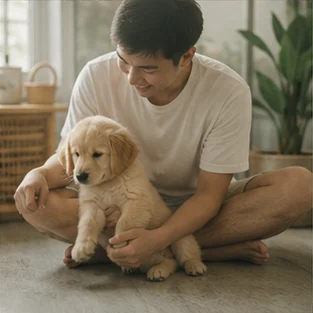
Bringing a puppy home: begin with a smaller, calmer space
Plan the handover, journey and first evening so that a puppy does not have to learn the whole household at once.
Arrival day has a narrower job than the first week: get the puppy home, make basic needs easy to meet and pass reliable information between people. Visitors and shopping can wait until that handover is complete.
What to take away
- Prepare the receiving person and travel plan before collection.
- Keep familiar food and actual care records together.
- Make the first evening calm, observable and flexible.
01Agree the handover before leaving
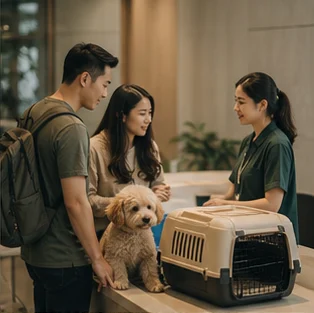
Ask the previous caregiver what food the puppy currently eats, how meals and rest usually work, and what veterinary documents exist. Photograph labels with permission and obtain the records rather than relying on a remembered summary.
Confirm the meeting point, who is handing over the puppy and who will receive it at home. If a health or medication instruction is unclear, seek clarification from the relevant veterinary team instead of improvising it during the journey.
02Prepare one manageable arrival area
Set up water, an appropriate resting place and a practical toileting plan before opening the front door. Remove accessible medicines, cleaning products and small items the puppy could investigate.
Decide which adult supervises and which doors remain closed. In an apartment, discuss the lift, corridor and balcony access with everyone at home; the puppy should not become the test of whether those boundaries work.
03Arrange a journey that can stay simple
Choose transport and a suitable secured carrier or travel arrangement before collection. Ask a veterinary provider about any animal-specific concern and confirm the driver accepts the arrangement; do not plan to hold a loose puppy while controlling a vehicle.
Bring the existing records and contact information where you can reach them. If the journey changes, prioritise a calm, safe transfer rather than squeezing in errands or introductions on the way.
04Keep the welcome small
Let the puppy explore the prepared area with supervision and access to rest. A crowd of greetings can make it harder to notice whether the puppy needs a quieter space, a toilet opportunity or help.
Use patient, reward-based encouragement for the behaviours you want. Do not punish an accident or force interaction to make the puppy settle faster. Agree on a small set of household words so different people are not asking for incompatible things.
05Close the day with a useful handover
Tell the next caregiver what was offered, what actually happened and any question needing follow-up. Record observations rather than declaring the puppy settled after a single evening.
A simple shared note can read: “Food label: [photo]; last offered: [time]; rest area: [place]; next caregiver: [name]; question for clinic: [text].” Contact a veterinary provider about health concerns; a busy arrival day is not a reason to postpone help.
Questions to take with you
Questions you can use
- Can I have the current food label and original care records?
- Who is responsible during the journey and the first evening?
- Which unclear instruction should we confirm before leaving?
This guide supports preparation and conversation, not diagnosis or veterinary treatment. Contact a veterinary provider for health concerns or possible emergencies; do not delay care to complete a checklist.
Sources and how to use this guide
These sources support the principles in this guide. It has not had a veterinarian’s clinical review, and it is not a facility inspection or a service-quality certification.