Dental care: questions to bring to your veterinarian
Understand what is being proposed before turning a mouth concern into a treatment decision.
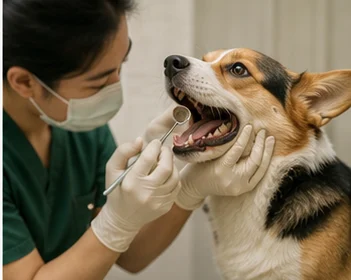
A dental conversation should connect what you noticed with what the veterinary team can assess. It should also explain any proposed procedure, the uncertainties and the care you would need to manage at home. Attractive teeth in a photograph are not a complete dental assessment.
Field notes
- Describe eating and mouth-related changes.
- Do not force the mouth open for this worksheet.
- Ask what remains unseen or uncertain.
- Request an individual home-care demonstration.
01Bring an observation, not a home examination
Note a change you have actually seen: how food is picked up, food being dropped, a new smell or a different response during familiar care. Give the time and context without deciding which tooth is responsible.
You do not need to touch a painful area or obtain a perfect inside-mouth photograph. Tell the clinic about your concern and ask how it should be assessed; completing this page is not a reason to postpone contact.
02Separate the first look from the full answer
Ask what the clinician can learn from the examination and what cannot yet be assessed. Visible surfaces alone do not show the whole tooth or everything below the gumline.
A useful question is: “Which parts of your recommendation are based on today’s findings, and which depend on further assessment?” Keep those categories separate in your notes instead of treating a preliminary discussion as a final result.
03Make procedure questions specific
If a procedure is proposed, ask who will perform and monitor it, what the assessment includes, what individual risks are being considered and how recovery is managed. This is a request for explanation, not a way to select an anaesthetic yourself.
Clarify consent if the findings change the proposed work. Record who the clinic should call, the number to use and which decisions need your agreement while your animal is in their care.
04Ask for home care that you can actually perform
Tell the team how your animal currently responds to mouth-related handling. Ask for a suitable demonstration, product guidance and what to do if the animal is uncomfortable.
Do not turn a suggested home routine into scraping, pulling or forcing access. A manageable plan should include its limits and the point at which you contact the team for another approach.
05Connect the estimate to follow-up
Use a blank question sheet: assessment included ___; possible additional work ___; estimate ___ VND; approval contact ___; written aftercare ___; follow-up arrangement ___. Ask which items are confirmed and which are conditional.
Before leaving, identify who answers recovery questions and where the animal-specific instructions are recorded. Keep the summary with the treatment record so another carer does not rely on a remembered verbal instruction.
Questions to take with you
Ask before deciding
- What can and cannot be assessed at this stage?
- How will you seek consent if the proposed work changes?
- Can you demonstrate appropriate home care for this animal?
A practical sequence
- Record a naturally observed change.
- Discuss assessment, monitoring and consent.
- Collect the written care and follow-up instructions.
This is a consultation guide, not a dental procedure, anaesthesia or home-treatment instruction.
Sources and how to use this guide
These sources support the principles in this guide. It has not had a veterinarian’s clinical review, and it is not a facility inspection or a service-quality certification.