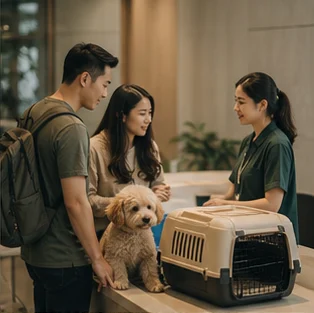
First vet visit: seven things to prepare
A useful first appointment starts before the examination table. These seven preparations help you arrive with a clear history, a manageable journey and questions worth asking.
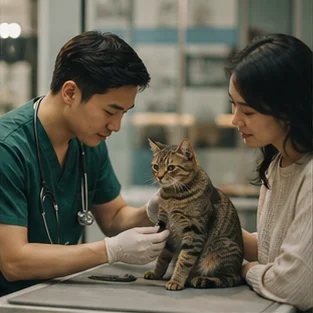
The appointment is booked and the carrier is by the door. Yet the moment the vet asks what has changed, a week of small observations can collapse into one unhelpful sentence: something seems different. You do not need to arrive speaking veterinary language. You need a usable account of life at home.
The list below is for an ordinary appointment, not a way to rule out illness. If you are worried that your animal needs urgent help, call a veterinary service first and describe what you can see. Completing a checklist should never delay care.
Before you begin
- Correct branch, appointment time and reason for visiting.
- Records and changes from the everyday baseline.
- Safe transport and instructions from the clinic.
- Costs, next steps and a follow-up contact.
1. Tell the clinic what the visit is for
A routine first check, a vaccination discussion and a new change in behaviour are not interchangeable appointments. Tell the clinic the animal's approximate age, species, reason for visiting and whether previous records exist. Confirm the branch, arrival time and contact number.
A network hotline is not necessarily the number of your destination. Save the branch's Vietnamese name and map location. Ask whether the clinic needs any samples or preparation; do not borrow instructions intended for a different examination.
2. Bring the history, including the gaps
Bring vaccination records, earlier results, adoption paperwork and the names of medicines or other products currently used. A readable photo of a label is more useful than a half-remembered brand. Note the last use when you know it, without filling gaps with guesses.
Newly adopted animals may arrive with an incomplete history. Mark unknown details as unknown. Missing paperwork is something to discuss with the vet, not a reason to invent a vaccination history or give an extra product yourself.
3. Describe an ordinary day before the unusual one
Start with the baseline: usual food, access to water, sleeping pattern and toilet routine. Then describe what changed and when. You are not turning the home into a laboratory; you are giving the vet a point of comparison.
'Left half the evening meal on two days' is more informative than 'poor appetite'. A short video of an unusual behaviour can help a conversation if it can be recorded without distress. Never provoke an episode simply to capture it.
4. Plan the journey, not just the destination
Check carrier latches, the lead and how your animal will be secured during the journey. For a cat, leaving the carrier in a familiar room before travel can make it a less surprising object. Bring familiar bedding when appropriate and ask about a quieter waiting area.
A short city journey can become difficult in heavy rain, heat or rush-hour traffic. Allow time and choose transport that keeps the animal secure and ventilated. Never leave them alone in a parked vehicle or assume a motorbike journey suits every animal.
5. Ask before changing food or medication
Do not independently fast your animal, stop medication or collect samples because someone else did so for their appointment. The clinic needs to know the planned examination and the individual animal before advising. If a sample is requested, ask how to collect it, store it and when to bring it.
Keep the instructions in writing or repeat them back. If a Vietnamese medical term is unfamiliar, ask for a plain-language explanation. One clearly confirmed instruction is better than several improvised preparations.
6. Choose the questions you need answered
A shopping list is not a care plan. Instead of asking what to buy, ask what matters today, what can be scheduled later and what information supports that decision. Bring your own priorities rather than every question you have read online.
Before agreeing to an additional test or service, ask its purpose, the estimated cost in VND and what could change the estimate. There is no single consultation price that represents every clinic. A written, itemised estimate is more useful than an unexplained headline number.
7. Leave with a plan you can actually follow
Before leaving, make sure you understand the next steps, any follow-up date and whom to contact if something worries you. If medication is prescribed, have the clinic confirm the instructions for this particular animal. An online article cannot replace that explanation.
Keep the invoice, results, written advice and contact details together. A first appointment need not solve every question in one afternoon. Its value is a documented starting point so the next conversation does not have to begin from memory.
Questions to take with you
Questions you can use
- What should we prioritise today, and why?
- What does the estimate include?
- When should I call after we go home?
PAVI is an information platform, not a veterinary or boarding service. Discuss individual health questions with a vet and confirm service terms with the provider.
Sources and how to use this guide
These sources support the principles in this guide. It has not had a veterinarian’s clinical review, and it is not a facility inspection or a service-quality certification.