Going out in heat: choose timing and rest stops first
Assess the whole outing, not just the moment you step outside.
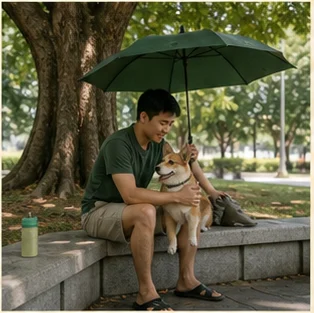
A cool-feeling departure can be followed by exposed waiting, a crowded entrance or an awkward return trip. Map those parts before choosing an outdoor activity with an animal. This page is about planning access and alternatives; it does not give a universal safe temperature, time allowance or heat-illness treatment protocol.
Before you begin
- If heat illness is suspected, contact a vet promptly.
- A venue accepting pets does not confirm suitable conditions for this animal.
01Draw the complete exposure route
Include the walk to transport, travel, queue, venue, breaks and journey home. Mark where you have actual information and where you are only assuming that shade or indoor access exists.
For a city café visit, the unknown may be the waiting area rather than the table. Ask about that point before deciding the destination is suitable.
02Check refuge and exit in advance
Ask the actual venue whether animals are allowed in the proposed shaded or indoor area and how you can leave promptly. An indoor room that excludes pets cannot serve as your animal's fallback.
RSPCA hot-outing guidance highlights planning for shade and water. Bring the animal's ordinary supplies and confirm access; do not assume the venue provides suitable resources because its social page shows a pet.
03Account for individual needs
Ask the vet how known health concerns or previous difficulty with heat should affect the plan. For cats or other species, request species-appropriate advice rather than transferring every dog recommendation.
Do not use one family's successful outing as a safe limit for your companion. This guide intentionally gives no temperature cutoff that could conceal differences between animals and travel conditions.
04Make the shorter alternative real
Decide what you will do if the expected conditions are unavailable: shorten the outing, choose an appropriate indoor alternative or leave the animal with agreed care instead.
Check whether that option actually works on the date. A paid booking need not force the original plan; avoiding an unsuitable wait may matter more than reaching every stop on an itinerary.
05Keep the care contact usable
Have a current veterinary contact and a person who can help with transport if concerns arise. If the animal seems affected by heat, prioritise professional advice rather than completing the outing.
After an ordinary visit, note which assumptions were wrong for next time. Do not turn a symptom-free trip into a guarantee; use the record to improve the route and reduce unresolved exposure points.
Questions to take with you
Questions worth asking
- Where can this animal actually rest away from exposure?
- Can we leave without another long wait?
Your working note
- Route stages __; confirmed refuge __; unknown stage __.
- Individual vet advice __; shorter alternative __; care contact __.
This is practical preparation, not veterinary, legal or travel clearance. Confirm individual care with the appropriate professional and current terms with the actual provider.
Sources and how to use this guide
These sources support the principles in this guide. It has not had a veterinarian’s clinical review, and it is not a facility inspection or a service-quality certification.