Moving home with a pet: a plan for the day doors open
Moving day needs a person responsible for the animal, not only a person responsible for the boxes.
A move creates repeated door openings, distracted adults and unfamiliar spaces at both addresses. Plan the animal's handover as its own small operation. This article covers the day you move after choosing a home; rental permission, travel eligibility and individual medical advice need their own confirmation.
Before you begin
- Name one animal-care lead and a backup.
- Check the new space before releasing ordinary access.
01Separate animal care from the loading job
Give one adult responsibility for the animal while other people manage movers, keys and inventory. Decide who takes over if that adult must leave or deal with an urgent problem.
Make this visible in the moving-day note. Everyone watching the pet usually means no one has a clearly agreed task when the lift arrives and several doors open at once.
02Prepare a controlled area at both homes
Identify where the animal can remain apart from the moving traffic, with its relevant resources and familiar items. Tell movers which door or area must not be opened.
At the new address, check the proposed area before arrival: access, windows, loose objects and cleaning supplies. A room being empty does not automatically make it a suitable temporary animal space.
03Plan loading and the journey handover
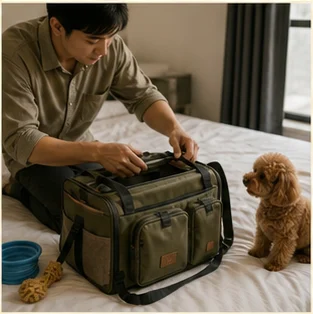
Confirm the transport arrangement accepts the animal and the actual carrier or equipment you will use. Keep the animal's required items accessible instead of buried in the moving truck.
Write who is responsible at departure, during the journey and when arriving. Do not add improvised restraint, medication or feeding changes just because the furniture schedule becomes inconvenient.
04Update useful contacts privately
Keep veterinary and backup contacts reachable and update relevant identification records with the actual service that maintains them. Tell a temporary carer which address applies on which date.
Share the new address only with people who need it. A public moving announcement does not need an apartment number, entry code or detailed period when both homes will be unattended.
05Inspect before expanding access
Once moving traffic is controlled, walk the new home for accessible hazards and unresolved openings. Remove or restrict the problem before inviting the animal to explore the affected area.
Keep observations about rest, eating and ordinary behaviour for the next care conversation. Do not promise overnight adaptation; revise the setup or ask a vet about concerning changes rather than treating a move as an explanation for everything.
Questions to take with you
Questions worth asking
- Who owns the animal handover while the movers load?
- Which new-home area has actually been checked?
Your working note
- Old-home area __; care lead __; transport confirmation __.
- Arrival owner __; checked room __; unresolved access __; contact updates __.
This is practical preparation, not veterinary, legal or travel clearance. Confirm individual care with the appropriate professional and current terms with the actual provider.
Sources and how to use this guide
These sources support the principles in this guide. It has not had a veterinarian’s clinical review, and it is not a facility inspection or a service-quality certification.