Public transport: check rules and waiting spaces
A carrier is equipment; permission comes from the company operating the journey.
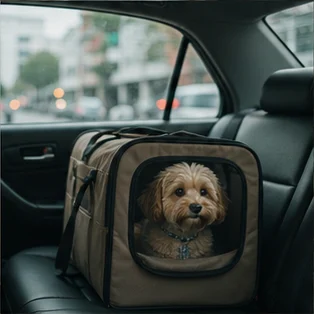
Before buying a carrier or a ticket, identify the exact train, bus, flight or transfer you intend to use. This is a verification worksheet, not a statement that public transport in Vietnam generally accepts pets. A positive answer for one company, date or animal should not silently become permission for another.
Before you begin
- Name the actual operating company, not only the booking platform.
- Do not assume a product labelled travel carrier meets every operator's rules.
01Write one row for each leg
Include departure point, destination, date, operating company and any connecting leg. If the seller and operator differ, ask who provides the animal-acceptance decision.
A practical Hanoi journey might have a home-to-terminal transfer and a longer main leg. Leave the actual company names blank until identified; a booking app's logo alone does not fill those fields.
02Ask with the relevant animal details
Tell the operator the species and other information its current policy requests. Ask about carrier requirements, documents, advance arrangements and how acceptance is confirmed for this service.
Request the official page or written response applying to your route. Do not convert somebody else's successful journey into a rule, and do not buy equipment solely because another passenger used it.
03Read the scope of the answer
Check the response date, route and operating company. Vietnam Airlines' policy, for example, states that its transport conditions and charges apply to flights it operates; it is not a public-transport standard.
Separate a general policy from confirmation of availability for your booking. A list of eligibility conditions can be useful while the operator has still not accepted the animal on your intended departure.
04Plan queues, transfers and refusal
Ask where the animal waits, how transfers work and whom to contact if boarding is refused or arrangements change. Confirm any alternative operator independently.
Keep a responsible person with the animal through the handover plan. For concerns about fitness or comfort, seek veterinary advice rather than inventing a restraint, feeding or sedation method to meet a timetable.
05Recheck after any itinerary change
A changed vehicle, departure or connection can change the question you asked. Return to the operator rather than relying on a response for the original plan.
Keep the dated confirmation offline beside the operator's contact. Your final record should make both accepted and unresolved conditions easy to find, so a family member can continue the conversation accurately.
Questions to take with you
Questions worth asking
- Does this answer apply to this exact departure and operating company?
- What remains unconfirmed even if the carrier meets your specification?
Your working note
- Leg __; actual operator __; policy URL/date __.
- Animal acceptance __; carrier conditions __; unresolved point __; alternative __.
This is practical preparation, not veterinary, legal or travel clearance. Confirm individual care with the appropriate professional and current terms with the actual provider.
Sources and how to use this guide
These sources support the principles in this guide. It has not had a veterinarian’s clinical review, and it is not a facility inspection or a service-quality certification.