Children and pets: boundaries that keep both safer
Kindness starts with an adult who can protect both the child and the animal's space.
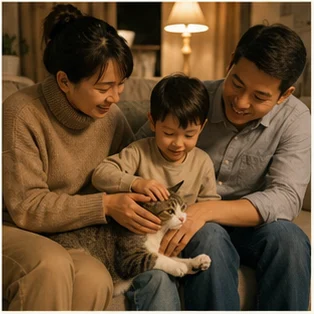
A family animal is not automatically comfortable with every hug, visitor or game. Set household boundaries that do not depend on a child reading subtle signals perfectly. RSPCA's dog-and-child guidance emphasises adult supervision and undisturbed rest; this guide turns those principles into a practical family agreement.
Before you begin
- An adult must actively supervise child–dog time.
- Do not assume familiarity or a breed label guarantees safety.
01Name the supervising adult
Before play begins, agree which adult is watching and able to intervene. Being somewhere in the apartment while occupied with a call is not the same plan as supervising the interaction.
If the adult needs to leave or cannot attend, use a suitable separate arrangement. Do not hand responsibility to another child or expect the animal to tolerate contact until the adult returns.
02Protect meals, rest and retreat
Give the animal spaces where children do not follow or disturb it. Explain that sleeping, eating and withdrawing are reasons to leave room, not opportunities to practise affection.
On a family room sketch, mark the quiet area and the child's play area. The rule should still apply when cousins visit or toys spill across the floor.
03Make contact optional
Teach gentle interaction without climbing, grabbing or forcing close face-to-face contact. An adult should manage the situation rather than requiring the animal to accept a hug for a photograph.
Offer activities that allow distance and choice, appropriate to the animal and child. If either is uncomfortable, end the interaction; completing a game is not more important than maintaining boundaries.
04Brief visitors before they enter
Tell visiting adults the same rules and identify who supervises their children. Check that food, small toys and open doors do not create additional problems during a busy gathering.
A useful message is: the animal's resting corner is not a play area; please ask the supervising adult before approaching. Specific instructions are easier to follow than saying our pet is friendly.
05Get help for worrying interactions
Describe concerning incidents to your vet or an appropriately qualified behaviour professional. Record what happened before and after, without encouraging the child to repeat it so you can capture a video.
If injury occurs, seek the appropriate medical or veterinary help. This article does not assess bite severity or offer a training technique to make a risky interaction acceptable.
Questions to take with you
Questions worth asking
- Who is actively supervising now?
- Can the animal move away without being followed?
Your working note
- Supervising adult __; separate arrangement __.
- Rest/food boundary __; visitor message __; professional question __.
This is practical preparation, not veterinary, legal or travel clearance. Confirm individual care with the appropriate professional and current terms with the actual provider.
Sources and how to use this guide
These sources support the principles in this guide. It has not had a veterinarian’s clinical review, and it is not a facility inspection or a service-quality certification.