Reading pet food labels: find questions, not just promises
Use the label to gather questions, not to crown a winner from the front-of-pack promise.
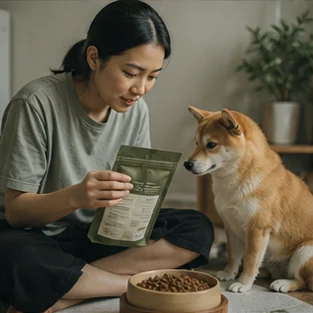
A food package contains several kinds of information: the product identity, how it is described, how it is intended to be used and how to contact the company. Read those parts separately. This helps a nutrition conversation without turning a marketing phrase or one ingredient into a verdict.
Field notes
- Keep the exact product identifiable.
- Check the intended animal and life stage.
- Ask about unclear feeding information.
- Bring unanswered claims to the manufacturer or veterinarian.
01Start with the product you actually have
Record the full name and variant, not just the brand. Find the intended species and any life-stage or use description, and note anything you cannot confidently interpret.
Photograph the relevant panels before discarding packaging. An online picture may show a different version, so keep your own label as the reference when asking a question about the food in your cupboard.
02Separate the intended use from the serving suggestion
Ask whether the product is intended as the main diet, a complementary item or something requiring specific veterinary guidance. Do not assume every package described as pet food serves the same role.
Copy the feeding information exactly enough to ask about its meaning: unit ___; serving description ___; calorie information, if given ___. Ask the veterinary team how it relates to this animal rather than creating a new ration from an unclear label.
03Make promotional claims answerable
Choose one phrase you do not understand and ask what the company means by it and what evidence or explanation they can provide. Keep the reply attached to that product variant.
An ingredient list alone cannot establish the whole food’s quality or individual suitability. Ask what additional information is needed instead of ranking foods by a single attractive ingredient or a premium-looking package.
04Find the person who can clarify the package
Locate the manufacturer or distributor contact and ask which team answers product and formulation questions. You can request clarification of a missing detail without making an allegation about the product.
Use a blank message: “For product ___, label version ___, I cannot find or understand ___. Could you explain ___?” If the answer refers to a different variant, ask them to confirm the match.
05Bring the label back to the animal
Share the label, the current diet and relevant health history with your veterinary team when considering a change. A general label explanation is not a clinical recommendation for every animal.
If a foreign label refers to a regional standard, ask what the statement actually means. This article does not translate another country’s labeling rules into Vietnamese law or promise that a logo establishes suitability.
Questions to take with you
Ask before deciding
- What is this product intended to be used for?
- Who can explain this specific label claim?
- How does the food fit this animal’s individual plan?
A practical sequence
- Keep photographs of the exact package.
- Write the unclear use or claim as a question.
- Discuss suitability with the veterinary team.
No brand ranking, legal-compliance determination or individual diet prescription is made here.
Sources and how to use this guide
These sources support the principles in this guide. It has not had a veterinarian’s clinical review, and it is not a facility inspection or a service-quality certification.