Treat boundaries: clarify who gives what, when, and how much
Keep small rewards visible when several people care for the same animal.

A household can honestly believe it gives very few treats when each person is counting only their own contribution. A shared record makes the whole picture easier to discuss. The purpose is cooperation, not blame, and the appropriate type and quantity should be discussed with your veterinary team.
Field notes
- Include every person who offers food.
- Name the actual treat and portion.
- Count extras used in other care.
- Agree the individual plan before dividing it.
01Find the moments when treats appear
Ask everyone about the ordinary situations in which they offer food: greetings, play, training, grooming or help with prescribed medicine. Include visitors and temporary carers if they contribute.
Describe the pattern without asking people to defend it. “Who offers what, and when?” produces more useful information than “Who keeps overfeeding?” and helps uncover contributions that were simply invisible.
02Replace a handful with an identifiable entry
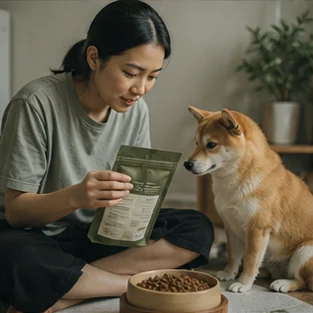
Write the product and the portion as accurately as you can from the information available. Keep a package image and ask the manufacturer about unclear serving or calorie information.
Use a blank entry: person ___; animal ___; occasion ___; item ___; portion known or estimated ___; label reference ___. Do not pretend pieces of different products are nutritionally interchangeable.
03Bring the complete picture to the veterinarian
Show the main diet and all extras together. Ask which types and quantities fit this animal, particularly when a health condition or a prescribed diet affects the discussion.
A treat arrangement should not quietly replace the main diet. This article gives no percentage or calorie allowance for an individual animal; ask the team to explain how their recommendation fits the overall feeding plan.
04Share the agreed boundary without losing warmth
Once you have a plan, agree how household members will know what has already been offered. Choose one visible note rather than several private tallies that cannot be reconciled.
Plan other enjoyable interactions the animal already likes, such as familiar play or quiet company, so every greeting does not have to become another food event. Do not force interaction when the animal wants space.
05Review the routine when life changes
A new carer, training arrangement or product can change the pattern without anyone intending it. Update the shared note and ask the veterinary team when new appetite or weight concerns arise.
Keep the conversation practical: “Our agreed item is ___; the record is at ___; please check with ___ before offering something different.” This supports consistent care without turning a family relationship into a daily argument.
Questions to take with you
Ask before deciding
- Which treats and quantities fit the current diet?
- How should food used during other care be included?
- What changes should lead us to review the arrangement?
A practical sequence
- Map who offers which extras.
- Discuss the whole diet with the veterinary team.
- Share one understandable household record.
This is coordination guidance, not a calorie prescription, training treatment or list of foods safe for every animal.
Sources and how to use this guide
These sources support the principles in this guide. It has not had a veterinarian’s clinical review, and it is not a facility inspection or a service-quality certification.