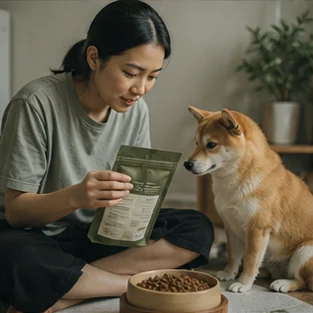
A home safety scan: see from your pet's height
A useful home check ends with named repairs, not a reassuring tick beside every room.
Homes change after deliveries, guests and ordinary tidying. This scan is for a home already shared with an animal: look for what became reachable, what now closes differently and which task nobody owns. A tidy room can still contain an accessible hazard, so inspect actual routes rather than appearances.
Before you begin
- Keep the animal away from the area being checked.
- Do not test a suspected hazard with the animal.
01Walk the rooms at pet height
Start at the entrance and follow the places your companion can actually reach. Look under furniture and beside doors, then consider the higher surfaces a climbing animal uses.
Use one row per room, not one score for the whole apartment. A bedroom with a closed cupboard today may need a different decision when a visitor leaves a handbag on the floor.
02Find food, medicines and small objects
Check accessible bags, bins, counters and bedside storage. FDA guidance identifies medicines, certain foods and household substances as possible dangers; appearance or a familiar brand is not a safety test.
Put human and animal medicines into their intended secure storage. If you suspect an ingestion, contact a vet promptly with the packaging; finishing this checklist is not the first priority.
03Review moving and enclosed spaces
Inspect loose cables, unstable items and places where an animal could be shut in during normal use. Ask who checks the room before closing storage or operating household equipment.
Write an action such as move cable out of reach or have fitting assessed. This article does not certify electrical work, furniture anchors or a particular barrier design.
04Assign an action and a temporary boundary
For each unresolved item, name the person who will deal with it and how animal access will be prevented meanwhile. A planned repair should not be marked complete.
A practical note reads: balcony latch, installer contacted, access closed, owner __. Keep useful facts visible without posting home entry information in a public pet group.
05Repeat after the home changes
Rescan the relevant rooms after rearranging furniture, bringing plants home or hosting guests. Ask whether the previous solution still works, rather than recopying yesterday's check marks.
Keep an unresolved list separate from completed work. The aim is an understandable household handover: the next carer should know which door stays closed and why, without relying on your memory.
Questions to take with you
Questions worth asking
- Which accessible item needs action today?
- Who checks new bags and deliveries before the animal approaches?
Your working note
- Room __; item __; access restricted by __.
- Action owner __; completion evidence __; next trigger to recheck __.
This is practical preparation, not veterinary, legal or travel clearance. Confirm individual care with the appropriate professional and current terms with the actual provider.
Sources and how to use this guide
These sources support the principles in this guide. It has not had a veterinarian’s clinical review, and it is not a facility inspection or a service-quality certification.