Renting with a pet: what to confirm in writing
Turn pet-friendly into written answers about this home and this animal.
A listing label cannot explain who gives permission, which shared spaces you may use or what a deposit covers. Before paying or moving, collect the actual lease and building rules. This guide helps organise questions; it does not state a universal Vietnamese right to keep an animal in rented housing.
Before you begin
- Identify the person authorised to answer for the property.
- Ask for current documents, not only a chat reassurance.
01Confirm which permission is being offered
Name the apartment, landlord or authorised representative and the animal you intend to keep. Ask whether the answer applies to your whole tenancy rather than a viewing or temporary stay.
Use a message such as: please confirm whether this apartment permits my __ and where that permission appears in our agreement. Do not substitute a broker's general advertisement for an identified response.
02Read lease and building rules together
Ask for the relevant clauses on animals and the current shared-building rules. Check whether they describe different responsibilities, restrictions or approval steps and flag contradictions before signing.
Keep the document dates beside your notes. If wording is unclear or the parties disagree, seek appropriate local legal advice; this article cannot determine which clause is enforceable.
03Separate charges from conditions
Request an itemised explanation of any animal-related deposit, cleaning charge or damage responsibility. Record the currency, amount supplied by the landlord, payment timing and conditions for return or deduction.
Leave unknown amounts blank rather than borrowing a number from another building. A refundable deposit, a non-refundable service charge and liability for damage are different questions, even when discussed in one conversation.
04Walk the everyday care route
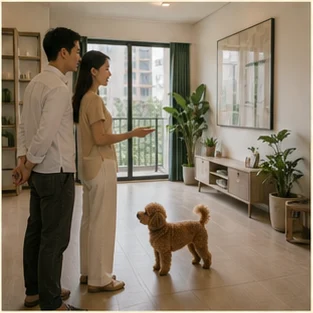
Ask about the actual route from apartment to entrance, lifts and permitted shared areas. Check how deliveries, waste disposal and an unfamiliar carer's access would work without assuming that pet-friendly means unrestricted access.
Then assess the home itself: rest, escape prevention and suitable resources. Permission is a contractual question; whether the space meets the animal's needs requires a separate practical assessment.
05Resolve the unclear points before commitment
Put the outstanding questions into one short list and ask for a written response from the relevant person. Keep the agreed version with your lease, not scattered across several family chats.
If you cannot reconcile important restrictions with daily care, consider another home or obtain advice before paying. A polished listing should not pressure the household into accepting conditions it does not understand.
Questions to take with you
Questions worth asking
- Who can confirm permission in writing for this apartment?
- Which charges are refundable, and under what written conditions?
Your working note
- Property __; animal __; permission source/date __.
- Lease clause __; building rule __; unresolved question __.
This is practical preparation, not veterinary, legal or travel clearance. Confirm individual care with the appropriate professional and current terms with the actual provider.
Sources and how to use this guide
These sources support the principles in this guide. It has not had a veterinarian’s clinical review, and it is not a facility inspection or a service-quality certification.