Windows and balconies: check again after every change
An open view is not an invitation to test how careful a pet will be.
A window or balcony assessment starts with access, not confidence in an animal's balance. Blue Cross warns that falls can occur around these openings. The practical task is to identify every opening the household uses and keep unsafe areas inaccessible while suitable protection is assessed.
Before you begin
- Never place an animal near an edge to test a barrier.
- Keep access closed when protection is unresolved.
01Inventory every opening
List balcony doors, sliding windows, hinged openings and service areas. Include the windows opened only for cleaning or ventilation; occasional use is still part of the household routine.
On an apartment sketch, record which person can open each point. A lock known only to one resident is not a complete plan for guests, cleaners or a temporary carer.
02Ask about the actual fitting
Have the opening and any proposed screen, mesh, latch or guard assessed by a suitably competent installer. Describe the animal and the way the window moves, including unusual or tilting configurations.
An insect screen or a product photo alone should not be treated as confirmation of pet containment. Ask what the fitting is intended to do, how it attaches and what inspection or maintenance it needs.
03Notice the approach, not just the edge
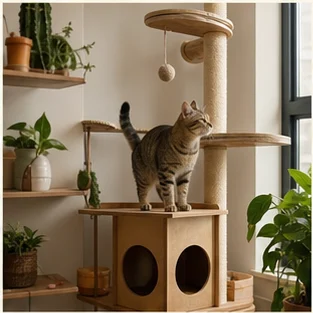
Look at furniture, shelving and stored objects near the opening. Rearranging a chair can change how an animal reaches a window without changing the window itself.
Record these access routes for the installer and household. Moving furniture may remove one route, but does not by itself make an unprotected balcony or open window safe.
04Give every visitor the same rule
Make instructions specific: this window stays closed; this balcony is inaccessible; contact this person before ventilation or maintenance changes. Avoid relying on a general request to be careful.
When arranging cleaning, say which room the animal will use and who checks doors afterwards. Do not share access codes in a public safety photo or online repair request.
05Inspect again after work or wear
After repairs, cleaning or visible damage, reassess the fitting before restoring animal access. Record who checked it and any unresolved concern rather than marking the entire apartment pet-proof.
If a fall or injury occurs, seek veterinary help promptly. This checklist supports prevention and household coordination; it does not assess injuries, certify a construction method or provide a DIY barrier recipe.
Questions to take with you
Questions worth asking
- Is this fitting intended for animal containment in this opening?
- Who confirms the window is secure after maintenance?
Your working note
- Opening __; current restriction __; installer question __.
- Household rule __; next inspection trigger __.
This is practical preparation, not veterinary, legal or travel clearance. Confirm individual care with the appropriate professional and current terms with the actual provider.
Sources and how to use this guide
These sources support the principles in this guide. It has not had a veterinarian’s clinical review, and it is not a facility inspection or a service-quality certification.