Building a walk routine: quality is not only minutes
Design a walk that works from your front door to the return home, with a shorter alternative ready.
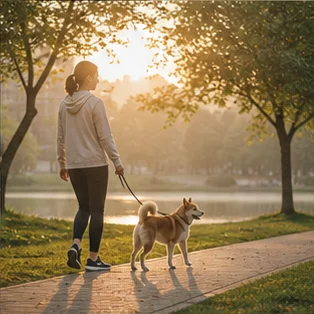
A reliable walk routine is more than choosing a distance on a map. Entrances, traffic, weather, the dog’s needs and the person holding the lead all shape the experience. Plan for adjustment rather than completing the same route at any cost.
What to take away
- Check the whole route, including the building exit.
- Choose a main option and an easier return.
- Let the dog’s needs matter more than a distance target.
01Map the difficult transitions
Start at the door: check the corridor, lift, stairs and first road crossing. Mark narrow passages, busy entrances and places where another dog could appear without room to pass.
Walk the route yourself when practical and note a place to turn back. A map pin for a park does not describe the journey to it, and a route that works for one caregiver may be difficult for another.
02Match timing to actual conditions
Consider heat, rain, noise and the dog’s individual health and activity needs before leaving. Ask the veterinary team about limits when the dog is young, older or has a care plan affecting exercise.
Do not assume a particular hour is always cool or quiet. Check today’s conditions and be willing to use the shorter option or change the outing rather than treating the usual schedule as a safety guarantee.
03Agree equipment and handling
Use appropriate, well-fitting equipment and ask a competent professional when fit or control is uncertain. Check condition before departure and make sure the person walking can manage the planned environment without relying on force.
Keep household instructions simple: who carries supplies, how to give space at an entrance and what to do when the route becomes crowded. Basic reward-based lead practice belongs in a manageable setting, not first attempted at a busy crossing.
04Include investigation and an easy return
Allow room for suitable sniffing and pauses instead of measuring success only by speed or distance. The route should offer opportunities to move away from pressure and return before the outing becomes too demanding.
Do not require greetings with every dog or person. Ask before approaching another animal and accept a refusal. A pleasant walk can be one where the dog investigates safely and passes others at a comfortable distance.
05Review one troublesome point
After the walk, identify one place that repeatedly caused difficulty and change a practical detail: a different exit, quieter path or earlier turn home. Record whether the change helped instead of expanding the route automatically.
A shared route card can read “Main route [ ]; short way home [ ]; places to avoid today [ ]; walker [ ].” Update it when roadworks or building access change; this is a household plan, not a verified city walking guide.
Questions to take with you
Questions you can use
- Where can we turn back before the route becomes difficult?
- Does this walk fit the dog’s current health and today’s conditions?
- Which single part of the route should we change next time?
This guide supports preparation and conversation, not diagnosis or veterinary treatment. Contact a veterinary provider for health concerns or possible emergencies; do not delay care to complete a checklist.
Sources and how to use this guide
These sources support the principles in this guide. It has not had a veterinarian’s clinical review, and it is not a facility inspection or a service-quality certification.