Carrier training for cats: make it familiar before travel day
Make the carrier a familiar object before a planned journey, while keeping urgent care separate from training progress.
Carrier practice is preparation for future travel, not a condition that must be completed before a cat receives necessary care. If a trip cannot wait, contact the clinic for a practical handling plan rather than delaying while you try to finish training.
What to take away
- Choose equipment that works for the cat and clinic access.
- Build voluntary familiarity before adding movement.
- Ask for help when a necessary journey is difficult.
01Choose a carrier you can actually use
Check size, stability, fastenings, ventilation and the manufacturer’s directions for the model you have. Ask the clinic whether its opening arrangement supports handling and examination, especially if your cat has particular needs.
Practise the human tasks without the cat: securing the door, carrying steadily and cleaning the carrier appropriately. A design that looks convenient online may still be awkward for the person who must carry it through your building.
02Make it part of the ordinary room
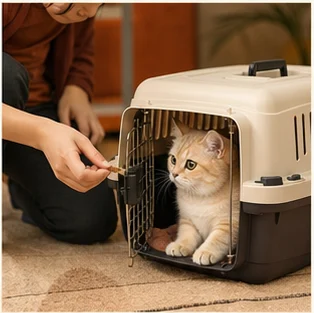
Keep the carrier available in an appropriate, quiet place rather than bringing it out only immediately before departure. Place suitable familiar bedding inside and leave access arranged safely so the cat can investigate.
Do not chase the cat towards it or turn every approach into a door-closing event. The first useful observation may simply be that the cat chooses to look inside, pass nearby or rest in it without pressure.
03Build on voluntary investigation
Use something appropriate that the cat enjoys to encourage comfortable exploration, respecting any current food instructions. Let the cat leave, and treat a small relaxed interaction as useful rather than insisting on full entry every time.
If the cat avoids the setup, review the location and difficulty instead of repeatedly placing it inside. Record the easiest step that actually works so all caregivers start from the same point.
04Add one manageable change
When the cat is comfortable with the current step, introduce a small change such as brief door movement or a short, steady lift only when appropriate. Follow the equipment instructions and return to an easier step if the cat is uncomfortable.
Do not combine closing, lifting, stairs and a car journey in the first progression. A planned visit can be discussed with the clinic in advance so the learning process and the actual appointment are not forced into the same rushed morning.
05Keep a backup plan for necessary care
Ask the veterinary team what to do if the cat cannot be transported comfortably for a required visit. Do not improvise forceful restraint, sedatives or human medication, and do not postpone an urgent consultation until the cat likes the carrier.
A practice note can read “Step the cat chose [ ]; small change [ ]; reaction [ ]; questions for the clinic [ ].” Bring it if needed. Progress is individual; professional support is part of preparation, not evidence that you failed.
Questions to take with you
Questions you can use
- Does this carrier’s opening and handling arrangement suit my cat and clinic?
- What voluntary step is comfortable before we add movement?
- What is the plan if a medically necessary trip cannot wait?
This guide supports preparation and conversation, not diagnosis or veterinary treatment. Contact a veterinary provider for health concerns or possible emergencies; do not delay care to complete a checklist.
Sources and how to use this guide
These sources support the principles in this guide. It has not had a veterinarian’s clinical review, and it is not a facility inspection or a service-quality certification.