Brushing a cat: read the stop signal before going longer
Build a brushing habit around what your cat can comfortably accept, not around finishing the whole coat in one sitting.
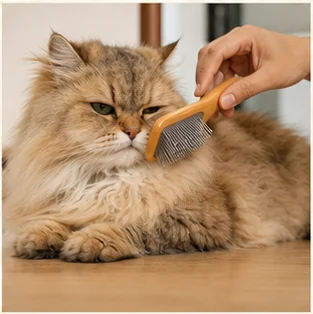
A brush on the shelf does not tell a household how grooming should happen. A small tolerance map is more useful: where gentle contact is accepted, which tool was recommended, and when the cat asks for the interaction to end.
Field notes
- Ask about the individual coat.
- Stop when the cat withdraws.
- Separate mats from ordinary brushing.
- Record changes for professional advice.
01Choose a tool with a reason
Take the brush you already own, or a clear photo of it, to a vet or cat-experienced groomer. Describe the coat rather than choosing solely from packaging marked suitable for cats.
Ask which areas it is intended for and request a demonstration if its use is unfamiliar. This article does not provide a dematting or blade technique.
02Begin with accepted contact
Choose an ordinary moment when your cat already accepts your presence. Start with a brief interaction rather than turning grooming into a task that someone must complete.
Mark an outline of the cat with areas where contact was accepted, avoided or not attempted. These are observations on that occasion, not permanent labels about temperament.
03Let the session end
RSPCA guidance recommends ending grooming when a cat shows discomfort. Do not restrain the cat to obtain a cleaner tolerance map or recruit another person to hold it still.
A useful success can be stopping before the interaction becomes a struggle. Record what you did and the response instead of awarding a score for how much fur was removed.
04Keep coat problems separate
Matted fur, a changed coat or a sore-looking area should not become an invitation to pull harder. Ask a professional to assess the next step.
Do not cut a mat with scissors or treat a skin patch from an internet picture. If grooming tolerance changes unexpectedly, tell the vet about that change too.
05Make the next visit specific
A handover can read: tool ___; area touched ___; response ___; area not attempted ___; change first noticed ___. Add a photo only if it can be taken without provoking discomfort.
When contacting a local provider, ask whether the named branch handles cats and who will assess the coat. A grooming booking is not proof that a skin concern has been medically assessed.
Questions to take with you
Ask before deciding
- Can you show us an appropriate tool for this coat?
- What response should make us stop?
- Does this change need a veterinary examination?
A practical sequence
- Prepare the recommended tool.
- Try only accepted contact.
- End calmly and note the response.
This is a tolerance and communication guide, not a restraint, dematting or skin-treatment tutorial.
Sources and how to use this guide
These sources support the principles in this guide. It has not had a veterinarian’s clinical review, and it is not a facility inspection or a service-quality certification.