Cat grooming: ask about necessity before booking
Start with the reason for grooming and the cat's condition, then ask a named provider what it can responsibly offer.
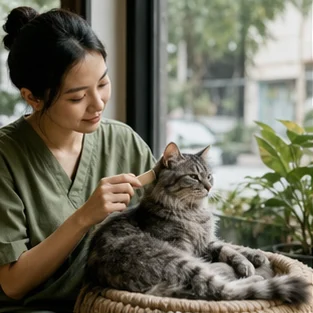
A cat grooming menu does not answer whether the animal needs ordinary coat care, help with an inaccessible area or a veterinary assessment. Make the first conversation about the problem you are trying to solve before discussing a finished look.
Field notes
- Define the reason for the visit.
- Confirm cat-specific handling experience.
- Agree limits before work begins.
- Separate appearance from health assessment.
01Describe the actual concern
Tell the provider whether the concern is routine coat maintenance, a new change, tangled fur or difficulty with home grooming. Include when you noticed it and what you have already tried.
A changed coat or sore-looking skin should be discussed with a vet. Do not treat a grooming appointment as a substitute for investigating a health concern.
02Ask who will handle the cat
Confirm that the actual branch takes cats, who performs the work and how the environment is organised during cat appointments. A business name or attractive photo does not answer those questions.
Ask how staff respond when the cat cannot tolerate the planned interaction. You need an intelligible explanation, not a promise that every animal can be made to cooperate.
03Discuss condition before scope
Send a clear coat photo if it can be obtained comfortably, but make clear that a photograph is not a complete assessment. Ask whether the provider needs to see the animal before confirming the work.
Record the proposed service in words rather than only showing a reference style. Keep optional work and uncertain areas separate so neither party assumes that everything is authorised.
04Agree when to pause
Ask which concerns would stop the service, when the provider would seek veterinary input and how it will contact you. Make sure someone can answer that call.
Do not ask a groomer to recommend sedation or accept a home medication suggestion from this guide. Clinical decisions need the treating veterinary team and an individual assessment.
05Take home a factual handover
A blank enquiry sheet can read: branch ___; reason ___; proposed scope ___; work needing another call ___; contact ___; unresolved question ___. Fill it from actual answers.
After the appointment, ask what was completed, what was not attempted and what ordinary home care needs demonstration. Do not interpret a neat coat or a source-checked directory profile as a clinical quality certificate.
Questions to take with you
Ask before deciding
- Is this suitable for grooming or should a vet assess it first?
- Who handles cats at this branch?
- What will make you pause and call us?
A practical sequence
- Describe the concern.
- Ask about handling and limits.
- Keep the agreed scope and handover.
This is a provider-question guide. It does not recommend sedation, diagnose skin problems or teach restraint and mat removal.
Sources and how to use this guide
These sources support the principles in this guide. It has not had a veterinarian’s clinical review, and it is not a facility inspection or a service-quality certification.