Cats on hot days: create more resting options
Check the room your cat actually uses, keep cooler choices and water accessible, and prepare a professional contact route before a hot day.
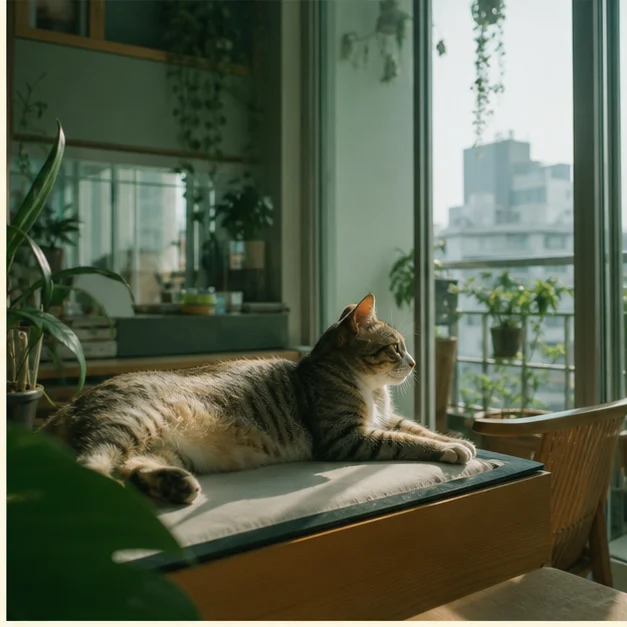
An outdoor forecast does not describe every room in an apartment. Sunlight, closed doors and an absent carer can change the practical picture. This is an indoor-access plan, not a safe-temperature calculator or treatment guide for heat illness.
Field notes
- Assess rooms at different times.
- Keep water and cooler choices usable.
- Secure ventilation routes.
- Contact a vet for suspected heat illness.
01Follow the sun through the home
Note which rooms receive direct sun and which areas become uncomfortable during the day. Check where the cat rests rather than assuming the room with the air conditioner is always accessible.
Use a blank room list: room ___; time checked ___; shade or cooling available ___; door access ___. Any recorded temperature is context, not permission to leave the animal there.
02Keep choices reachable
Ensure that drinking water and a cooler resting option are available without a closed door or another animal blocking the route. Cornell's heat guidance emphasises access to water and suitable cooler environments.
Ask the household who will check those resources while you are away. Owning a fountain or cooling product does not show that it is working or that this cat can use it.
03Ventilate without opening a new risk
Review windows and doors before changing airflow. A cooling plan should not create an escape or fall route, and a product sold as a screen is not automatically an animal barrier.
If protection is uncertain, keep the opening inaccessible and seek suitable advice. Choose a practical indoor alternative rather than testing a gap with the cat present.
04Discuss individual needs
Tell the veterinary team about relevant health history and any difficulty moving between resting or drinking places. Ask whether the usual household plan needs adjustment for this animal.
Do not infer that a coat colour, age label or internet temperature threshold establishes safety. The provider should explain individual concerns without this article assigning a risk score.
05Prepare the response before trouble
Keep the veterinary contact, actual receiving branch and transport option easy to find. If heat illness is suspected or the cat has concerning breathing, contact a vet promptly and follow its instructions.
Do not wait to finish the room sheet or collect a better video. Record what happened and the surroundings only when it does not interfere with obtaining help.
Questions to take with you
Ask before deciding
- Can the cat reach the cooler room when nobody is home?
- Who checks water and cooling equipment?
- Which veterinary branch should we call if concerned?
A practical sequence
- Inspect actual rooms.
- Assign a resource check.
- Keep the contact route available.
This is preventive household planning. It does not provide a safe heat threshold, home treatment procedure or assurance that a cooling product is suitable.
Sources and how to use this guide
These sources support the principles in this guide. It has not had a veterinarian’s clinical review, and it is not a facility inspection or a service-quality certification.