A safer balcony for cats: review gaps and habits
Treat a balcony as an access-control problem that needs suitable physical assessment, not as a view that becomes safe when someone watches.
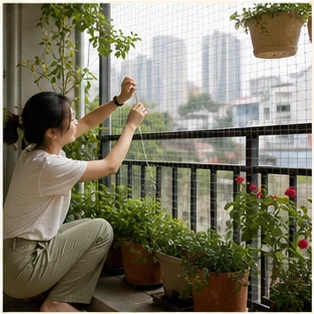
A balcony can change after a delivery, cleaning visit or furniture move. This guide helps you describe those changes to the household and a suitable installer. It cannot certify a net, mesh, latch or do-it-yourself enclosure.
Field notes
- List openings as well as railings.
- Include climbable furniture.
- Keep access closed until checked.
- Recheck after changes.
01Map possible routes
Sketch the balcony from the door outward. Mark open edges, gaps, stored objects and anything a cat might use to reach a different height or surface.
Do not place the cat there to test the drawing. A photograph taken without exposing the animal can help an installer understand the space and its dimensions.
02Look at how the door is used
A secure-looking barrier does not explain what happens when laundry, deliveries or visitors move through the door. Record who opens it and whether the cat can enter unnoticed.
Agree one simple household rule while protection is incomplete: keep the animal away from that access point. Tell visitors directly instead of relying only on a small sign.
03Ask for an appropriate assessment
Give the installer the opening inventory and explain that animal access is the concern. Ask about materials, attachment points, inspection and whether the building permits the proposed work.
Written building permission and physical suitability answer different questions. Do not treat either a landlord's approval or a product description as a guarantee against escape or falls.
04Offer an indoor alternative
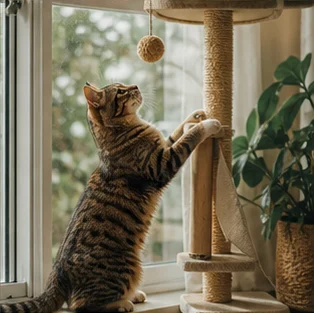
While questions remain unresolved, provide a usable indoor resting or observation place away from the balcony entrance. It should not create a new route to an unsecured window.
Keep familiar resources available so keeping the balcony closed does not mean confining the cat without its ordinary choices. Seek individual advice if changing access causes concern.
05Assign the next check
Use a blank register: opening ___; unresolved issue ___; responsible person ___; professional answer/date ___; next check trigger ___. Leave unknown answers visible.
Revisit it after furniture changes, repairs or damage. If you cannot establish that protection remains suitable, prevent access and ask for another assessment rather than testing it with the cat.
Questions to take with you
Ask before deciding
- Who can assess this installation for animal access?
- Which changes require another inspection?
- Who keeps the door controlled during cleaning?
A practical sequence
- Map without exposing the cat.
- Keep uncertain access closed.
- Obtain assessment and record changes.
An editorial checklist is not engineering approval or a guarantee of balcony safety. Building conditions require direct local confirmation.
Sources and how to use this guide
These sources support the principles in this guide. It has not had a veterinarian’s clinical review, and it is not a facility inspection or a service-quality certification.