Car travel with a dog: prepare for the short trip first
Plan loading, restraint, the journey and unloading as one connected trip rather than a seat in a car.
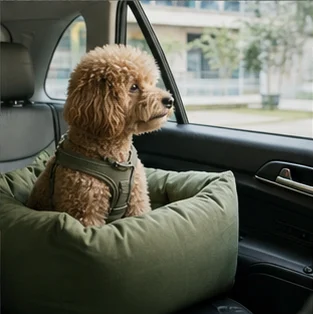
A dog-friendly ride begins before the engine starts. Confirm the vehicle arrangement and prepare for the moments when doors open, because reaching a destination does not finish the journey until the dog is safely received.
What to take away
- Use suitable secured travel equipment and its actual instructions.
- Build familiarity before a nonurgent long trip.
- Plan for stops, delays and a safe handover.
01Confirm the vehicle and equipment
Ask how the carrier or restraint should be fitted in the actual vehicle and follow the manufacturer’s instructions. Suitable restraint helps prevent a loose animal from distracting the driver; a passenger’s arms are not a substitute.
For a hired ride, confirm the driver accepts the dog and the proposed setup before arrival. Do not assume pet-friendly means a particular device is supplied, correctly fitted or appropriate for your animal.
02Prepare a manageable introduction
Before a planned trip, let the dog become familiar with the travel equipment in a calm setting. Ask for individual advice if entering the car or fitting the restraint causes difficulty.
Do not make the first learning attempt a long journey with no option to stop. Record what part was difficult—approaching the car, loading, engine noise or movement—so a professional can address the actual issue.
03Control the door-opening moments
Decide who opens the door, who handles the dog and where the transfer takes place. Keep the route between the home and vehicle secure and avoid passing the dog between people next to moving traffic.
Confirm the receiving entrance before unloading. A message to the driver can say, “Please wait while I check the entrance before we open the car door.” Arrange a safe stopping place; this is not a request to stop somewhere dangerous.
04Allow for delay and changing conditions
Consider temperature, appropriate breaks, water and where the dog can be supervised if the journey is delayed. Never leave the dog unattended in a vehicle while completing an errand.
Keep the destination and an appropriate veterinary contact accessible. A navigation estimate cannot promise a fixed travel time, so avoid plans whose safety depends on every road being clear or the receiving person answering immediately.
05Discuss distress before the next trip
Tell the veterinary team if travel repeatedly causes concerning signs or marked distress. Describe the sequence and ask how health, training and any treatment plan should be coordinated.
Do not give a human travel medicine, sedative or borrowed prescription. Medication decisions belong to the treating team. After a trip, note what helped the handover and what failed so the next journey begins with a better plan, not simply stronger restraint.
Questions to take with you
Questions you can use
- How should this travel equipment be fitted in this vehicle?
- Who controls the dog and doors at each transfer?
- Which part of travel needs individual veterinary or training support?
This guide supports preparation and conversation, not diagnosis or veterinary treatment. Contact a veterinary provider for health concerns or possible emergencies; do not delay care to complete a checklist.
Sources and how to use this guide
These sources support the principles in this guide. It has not had a veterinarian’s clinical review, and it is not a facility inspection or a service-quality certification.