Brushing a dog: make a small task feel calmer
Make routine coat care manageable by matching the tool, location and handling to your individual dog.
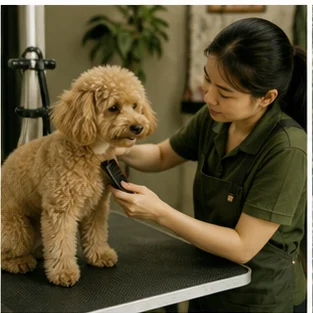
Brushing at home is a care interaction, not a task that must be finished at any cost. Start by understanding what this coat needs and what your dog can comfortably tolerate. Difficult mats, painful skin and handling concerns are reasons to ask for help.
What to take away
- Ask which tool and approach suit the actual coat.
- Keep sessions manageable and handling voluntary where possible.
- Do not cut tight mats or brush through pain.
01Clarify the coat's needs
Ask a qualified groomer or veterinary team about the dog’s coat, suitable tools and the parts that need particular attention. A breed label alone may not describe the coat you are dealing with today.
Bring a clear ordinary photo or describe the problem before buying another brush. Ask the professional to demonstrate appropriate use; this article does not specify a universal pressure, frequency or grooming schedule.
02Choose a place that helps both of you
Use a stable, comfortable location with suitable footing, enough light and room for the dog to move away safely. Put tools within reach so you do not leave an animal unsecured on a raised surface.
In a shared home, choose a time without people stepping over the dog or opening the nearby door. A calm floor-level setup may be more practical than copying a salon table without its safety arrangements.
03Introduce the interaction in small parts
Allow the dog to investigate the tool and reward comfortable participation. Begin with manageable handling rather than immediately working through the most difficult area, and pause when the interaction stops being comfortable.
Do not pin the dog down to finish a quota. Tell the groomer which parts were easy and which caused avoidance; that information is more useful than presenting an apparently completed coat while hiding a struggle.
04Separate ordinary care from a problem
Loose hair and routine maintenance are different from tight tangles, injured skin or apparent pain. If you find something concerning, stop working that area and seek appropriate advice rather than increasing force.
Do not slide scissors under a mat or assume more brushing will solve a skin problem. A groomer can discuss coat management, while medical concerns need a veterinary provider; the roles should not be blurred.
05Keep a simple coat map
Record the location of a difficult area, what you observed and what tool was used. Avoid assigning a diagnosis from redness or a photograph; document the question you need answered.
A note can say “Coat area [ ]; tool [ ]; reaction [ ]; question [ ].” Bring it before the next appointment so the provider can plan time and handling. Revise the home routine after guidance instead of adding products on your own.
Questions to take with you
Questions you can use
- Which tool and handling method suit this coat?
- Which areas should I leave for professional assessment?
- What should our home-care routine change after this visit?
This guide supports preparation and conversation, not diagnosis or veterinary treatment. Contact a veterinary provider for health concerns or possible emergencies; do not delay care to complete a checklist.
Sources and how to use this guide
These sources support the principles in this guide. It has not had a veterinarian’s clinical review, and it is not a facility inspection or a service-quality certification.