Playing with a kitten: finish before it becomes too much
Make play easy to start, supervise and finish, with toys stored where a kitten cannot reach loose strings or small parts.
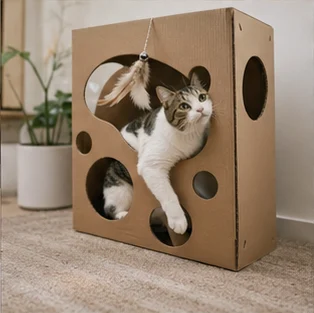
A consistent play routine does not require buying every toy in a shop. It requires people to agree what is available, which items need supervision and how the kitten can disengage. This is a household play plan, not a target for exhausting an animal.
Field notes
- Inspect toys before use.
- Keep hands out of the game.
- Allow a quiet exit.
- Put supervised toys away.
01Check the toy, not its marketing
Inspect the actual item for loose attachments, damage and parts that could be swallowed or trap the kitten. Follow its use instructions and remove it from use when its condition is uncertain.
A blank toy card can read: item ___; supervised use only ___; damage checked by ___; storage place ___. A pet-shop label does not replace inspection after ordinary wear.
02Choose an appropriate target
International Cat Care advises keeping play directed at toys rather than hands and feet. Agree that everyone, including visitors, follows the same boundary.
Keep a suitable toy accessible to the supervising adult so changing the target does not depend on finding one after the game has started. Do not use another pet as the kitten's play equipment.
03Leave room to stop
Choose a setting where the kitten can move away and where play will not pull it toward an open door or unsafe edge. Keep the session responsive rather than enforcing a duration.
When the kitten disengages, do not chase it into its resting area to restart. If activity changes unexpectedly or causes concern, discuss that change with the veterinary team.
04Store the risky loose items
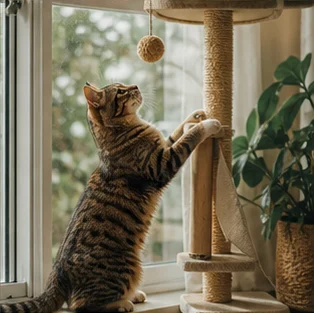
Stringed or elastic wand toys need supervised use and secure storage between sessions. Put them away before the adult turns to another task, not after the kitten is already playing alone.
Check the floor and nearby furniture for detached pieces. If ingestion or entanglement is suspected, contact a vet rather than attempting a procedure from this play guide.
05Give the household one routine
Write a short handover: inspect, choose a toy, supervise, allow an ending, store. Name the adult responsible when children or guests are involved.
Record which games the kitten chooses and which it avoids. This helps the next person offer a workable activity without claiming that every kitten prefers the same style or amount of play.
Questions to take with you
Ask before deciding
- Which toys must be locked away after use?
- Who supervises when visitors or children play?
- What change in activity should we discuss with the vet?
A practical sequence
- Check the toy.
- Play under supervision.
- Clear and store before leaving.
This guide covers ordinary play organisation. It does not diagnose behaviour, prescribe exercise or explain removal of swallowed or tangled objects.
Sources and how to use this guide
These sources support the principles in this guide. It has not had a veterinarian’s clinical review, and it is not a facility inspection or a service-quality certification.