Moving home with a cat: keep a few familiar things
Prepare a familiar, usable starting space and let observations guide the settling plan instead of imposing a move-in deadline.
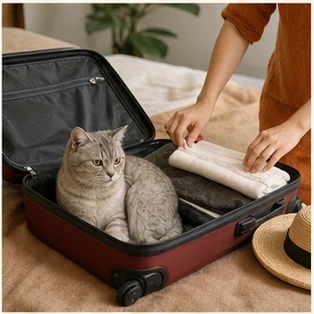
The removal van's arrival is not the same as the cat being ready to explore. Separate the human moving schedule from the animal's adjustment. The general moving-day plan handles logistics; this sheet focuses on what the cat can use after reaching the new home.
Field notes
- Prepare resources before arrival.
- Keep familiar belongings identifiable.
- Control access during deliveries.
- Record what the cat actually uses.
01Set up the destination room
Before the cat arrives, identify a room where entry can be managed and necessary resources are accessible. Check the room itself for openings and hazards; a closed door does not complete that check.
Write down where food, water, litter, rest and hiding options will go. Ask for individual guidance if mobility, illness or another animal changes what is suitable.
02Move familiar things deliberately
Pack the cat's familiar bedding and ordinary belongings as an identifiable care bag rather than dispersing them among boxes. Label it so helpers do not replace or discard its contents.
Make a simple unpacking list with locations, not a shopping list. The goal is to make existing resources available, not to prove that an expensive new bed will improve adjustment.
03Manage repeated door opening
Choose one person to oversee the cat's area while movers and visitors are active. Tell everyone which door must remain controlled and who can authorise entry.
A blank household note can read: cat's room ___; responsible adult ___; delivery route ___; spare key holder ___. Do not post private access codes on a public notice.
04Observe before expanding access
Record whether the cat is using the prepared resources and what happens around normal household activity. Do not pull it from hiding to demonstrate that it is settling.
Use these observations when discussing wider access with a professional. A calendar date alone cannot show that the animal, household and physical space are ready.
05Update identity and future access
Check the contact information attached to whatever identification record your cat actually has. Ask the relevant provider how to update it; possession of an identifier does not prove a database is current.
Discuss any future outdoor access with your vet and assess the new surroundings separately. Do not reuse an old home's habits as evidence that this location is suitable.
Questions to take with you
Ask before deciding
- Who controls the cat's room during deliveries?
- Which familiar resources should be immediately available?
- Who can advise on this cat's next access step?
A practical sequence
- Prepare the room.
- Unpack the cat's own bag.
- Keep an adjustment record.
This guide does not prescribe a settling period or certify outdoor access. Health and behavioural concerns need individual professional advice.
Sources and how to use this guide
These sources support the principles in this guide. It has not had a veterinarian’s clinical review, and it is not a facility inspection or a service-quality certification.