Senior cats: see comfort through very small changes
Look for changes in how your older cat reaches ordinary resources, then discuss practical support with the veterinary team.
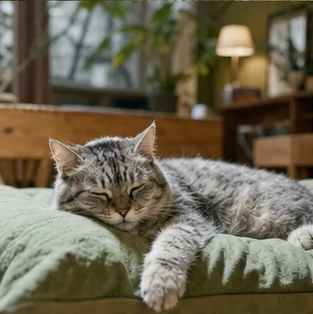
A favourite chair tells you more when you compare it with your cat's own earlier routine. The question is not whether the cat acts young enough, but whether eating, resting, toileting and contact remain comfortably accessible.
Field notes
- Compare with this cat's baseline.
- Notice routes, not just destinations.
- Keep changes separate from diagnoses.
- Check whether support is actually used.
01Describe a familiar activity
Choose something the cat normally does without prompting, such as approaching its bed or visiting the litter area. Write what looks different and when you first noticed it.
Do not ask the cat to repeat a jump for a video. If a naturally occurring moment can be recorded without disturbance, ask the clinic whether that record would help.
02Trace the route to essentials
Follow the route to water, food, rest and litter with your eyes. Note slippery stretches, height changes or crowded passages to discuss with the vet.
A resource can exist in the home but still be difficult to reach. Ask which environmental changes suit this cat rather than purchasing a standard senior-pet accessory package.
03Include less visible changes
Tell the clinic about changes in grooming, interaction or preferred resting places, even when there is no dramatic incident. Do not automatically describe these as normal ageing.
Keep descriptions separate: less grooming on one area is different from refusing all contact. Specific observations help the professional ask more useful questions.
04Agree a practical support
Bring a room photo and ask which adjustment to try first. Clarify who will set it up, what ordinary activity to observe and how to contact the team if things become worse.
A blank access card can read: resource ___; obstacle observed ___; agreed change ___; installed by ___; response ___. It records a discussion, not a clinical test.
05Review use, not appearance
After an agreed modification, note whether the cat uses the resource more comfortably in normal life. An attractive ramp or bed that remains unused has not answered the original question.
Bring both improvements and unresolved difficulties to follow-up. Do not postpone veterinary advice because the house has been rearranged, or stop prescribed care because one activity looks easier.
Questions to take with you
Ask before deciding
- Which access issue should we address first?
- What change would you like us to observe?
- When and how should we report a new difficulty?
A practical sequence
- Record a familiar activity.
- Discuss obstacles and support.
- Review actual use.
Environmental support does not diagnose or treat the cause of a change. The veterinary team should assess new or worsening difficulties.
Sources and how to use this guide
These sources support the principles in this guide. It has not had a veterinarian’s clinical review, and it is not a facility inspection or a service-quality certification.